The Ultimate Overview to Permanent Vacation Lighting for Modern Homeowners
Permanent exterior lighting used to be a specific niche upgrade, primarily scheduled for big personalized homes or commercial buildings that wanted a refined appearance year-round. That has actually changed. Today, more house owners are weighing Permanent Vacation Lighting as both a comfort function and a design choice, much like landscape lighting, safety electronic cameras, or wise watering. The appeal is apparent once you have actually invested a couple of winters climbing up a chilly ladder, untangling strings of lights, changing half-burned areas, and attempting to make the roofline appearance even from the street.
What makes permanent systems different is not just that they stay in place. A well-designed arrangement enters into the house. Throughout December, it can create a full holiday display. In July, it can cast a refined accent clean for exterior dinners. In October, it can shift to autumn tones. On common nights, it can stay almost unseen. That last point issues more than lots of people expect. House owners are typically thinking about the feature, however they acquire based on look. If the item looks cumbersome in daylight or calls attention to itself when switched off, excitement has a tendency to drop quickly.
This guide is for house owners who want to understand how these systems function, what a correct Permanent LED Lighting Setup entails, and just how to evaluate whether the investment makes good sense for their home.
What permanent holiday lights really are
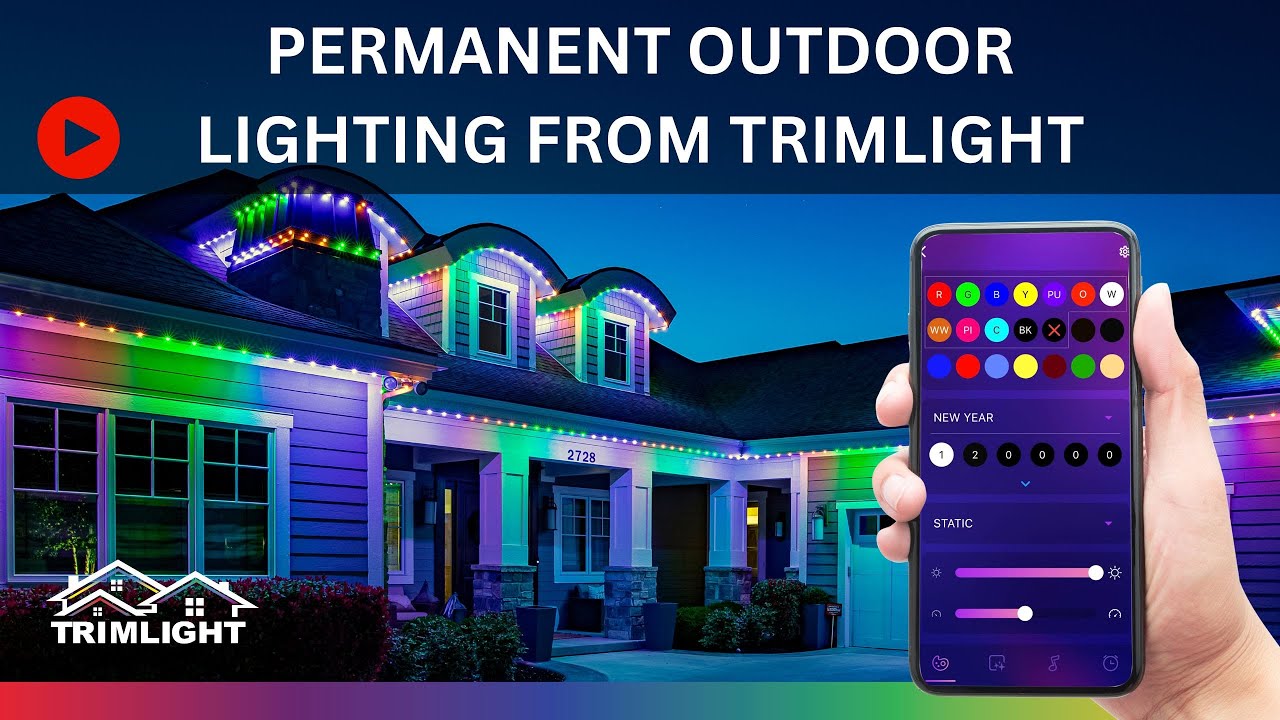
At a standard level, long-term holiday lights are inconspicuous LED lights systems mounted along the roofline, fascia, soffits, or trim of a home. They are made to remain installed year-round and to be regulated with an application, timer, wall surface switch, or home automation system. A lot of contemporary systems use addressable LEDs, which suggests private lights or small groups can alter color separately. That opens the door to going after effects, fixed scenes, arranged programs, and seasonal presets.
The crucial difference is that not all permanent lights items are meant for the very same usage. Some are built mostly for festive color and animation. Others favor architectural accent lights. The very best property systems often link both categories. They can generate vibrant holiday scenes when wanted, however they also supply restrained everyday settings that do not make the home resemble a theme park.
In method, house owners have a tendency to make use of these systems in three methods. The first is apparent, holiday style without the annual configuration and takedown cycle. The second is visual appeal, especially for homes with solid rooflines, gables, or entry details that gain from refined night illumination. The third is practical lifestyle use, such as lighting an outdoor patio side, noting a driveway-facing elevation, or creating a welcoming appearance when guests show up after dark.
Why home owners are making the switch
The toughest reason is convenience, yet ease alone does not clarify the https://fixedlightplan459.rivetgarden.com/posts/exactly-how-long-term-vacation-lighting-simplify-designing-while-enhancing-home-value development in demand. Individuals are likewise reacting to a few recurring frustrations.
Traditional string lights are momentary deliberately. Clips break. Wind pulls lines loose. Areas fall short at the worst time. Roof gain access to gets riskier yearly, especially for homeowners with high pitches, second-story eaves, or slick composite surfaces. There is also the storage issue. A big residence can conveniently create a number of containers of seasonal lights, expansion cables, clips, and replacement light bulbs. Even when the lights work, the process is repeated and taxing.
A permanent system changes the whole formula. As soon as the hardware is mounted and configured, the labor shifts from physical configuration to a few faucets on a phone. Home owners can set up shades for significant holidays, sporting activities events, birthday celebrations, community gatherings, or silent daily usage. If a youngster wants purple and gold for graduation weekend or a household wants red, white, and blue for a summertime event, it takes minutes as opposed to a full afternoon.
There is also a security disagreement that ought to not be rejected. Every professional that works around homes has seen makeshift ladder configurations that invite an autumn. Removing the annual roof regimen deserves genuine cash to numerous families, specifically older home owners or anybody that has already had a close telephone call hanging lights in bad weather.
The design question that matters most: exactly how it looks in daylight
The most common error individuals make is going shopping by app features prior to they examine how the equipment vanishes into the home. Fancy color scenes are very easy to sell. Tidy daytime look is harder to accomplish, and it is where product top quality and installer skill come to be obvious.
A long-term lighting system ought to look willful, not tacked on. That normally indicates the light channel or installing track is color-matched to the soffit or fascia, the cord runs are hidden, and the spacing complies with the architecture of the home rather than a one-size-fits-all pattern. On a white or cream residence, small inequalities might be barely noticeable. On dark bronze, black, charcoal, or stained wood outsides, poor matching stands out immediately.
I have seen 2 installments on comparable homes create totally various perceptions. One went away so well that neighbors just noticed it the very first time it was activated. The various other attracted attention everyday since the track rested proud of the trim, the cord changes were revealed, and the installers did not make up a difficult gable crossway. In the evening, both homes shone. In daytime, just one resembled a costs upgrade.
This is where seasoned judgment matters. An excellent installer is not just affixing lights. They are reading sightlines from the street, representing trim depth, preparing corners, and selecting mounting areas that maintain the architecture.
Understanding the light quality
People frequently focus on color-changing ability, but the quality of white light is just as important. For numerous homes, one of the most stylish everyday setting is not saturated shade in any way. It is a soft white radiance that highlights the roofline without looking severe. That is why many property owners ask particularly for Traditional Warm Soft Lights. They desire something inviting and calmness, closer to candlelight or standard incandescent holiday bulbs than the cold blue-white tones common in older LED products.
Color temperature and brightness control shape the feeling of your house more than most buyers recognize. A really great white can make rock, stucco, and repainted trim feeling clean and sterile. A warmer white has a tendency to flatter block, timber, and landscaped facades. Dimmer ability also matters. Complete output might be best for a vacation occasion, but as well hostile for a typical weekday night. The ideal system lets you reduce intensity and produce scenes that feel polished rather than loud.
Even with RGB or RGBW systems, cozy whites differ by manufacturer. Some products imitate warm white with shade blending, which can be appropriate at a distance however might not look as natural up close. Others include a dedicated white diode that typically delivers a cleaner building outcome. If subtle daily use is necessary to you, ask to see the system face to face in the evening, not simply in marketing photos.

What an appropriate Permanent LED Lights Installation includes
A top quality setup begins long before the first hole is drilled. The specialist must analyze the roofline, power schedule, trim products, dampness direct exposure, and control place. They need to additionally ask exactly how you intend to make use of the lights. A family that wants a subtle warm-white accent a lot of the year might require a different layout and programs technique than a property owner who wants animated holiday scenes noticeable from the end of the block.
The installment itself normally entails a placing channel or track, low-voltage or line-voltage power elements relying on the item, control equipment, and the LED nodes or modules. Some systems tuck under the soffit and cast light exterior or descending in a wash result. Others sit near the fascia side for a more specified point-of-light look. Neither is naturally far better. It relies on the home design and the aesthetic impact you want.
What divides professional job from hurried job is attention to the unglamorous information. Power materials need proper placement and weather condition defense. Penetrations require sealing. Wire runs require strain relief and clean routing. Futures need voltage planning so illumination remains consistent from one end to the various other. Corners require to be taken care of nicely, specifically on multi-level homes where changes show up from the street.
If a specialist can not clearly explain how they handle these fundamentals, that is a warning sign. Fancy application trials do not make up for bad electric planning or careless coating work.
Homes that benefit the most
Not every house acquires the exact same aesthetic reward. Houses with strong architectural lines tend to benefit the most, especially those with clear eaves, front-facing gables, garage tops, dormers, and covered entryways. A moderate home can look striking with a thoroughly lit roofline. A huge home with difficult altitudes can additionally benefit, however only if the format is selective. Extra lights do not constantly imply a much better result.
Some property owners presume every edge must be lit. In technique, restraint usually looks much better. Lighting only the front-facing building aspects can develop a cleaner, extra balanced look than wrapping every side and back edge. That approach can likewise lower expense significantly.
Homes with fully grown landscaping present one more intriguing situation. If trees already mount your house and landscape illumination is doing some of the work at ground degree, the long-term roofline illumination ought to complement that impact as opposed to subdue it. The nicest jobs normally feel split. Your house glows delicately above while path lights, uplights, or porch components take care of the reduced aesthetic field.
Cost, worth, and what drives the price
Permanent illumination systems are not impulse purchases. Set up rates differs commonly based upon item kind, home size, roofing system complexity, shade capacity, and labor access. An uncomplicated single-story installation will set you back much less than a two-story home with high pitches, several heights, and long terms. In broad terms, property owners typically experience pricing that varies from a number of thousand dollars for smaller homes to well beyond that for big personalized residences.
The main cost chauffeurs are not mystical. The video footage of the roofline matters. So does the number of edges, peaks, levels, and power zones. Product high quality issues, especially in the track, LEDs, control system, and weather condition resistance. Labor can turn dramatically based on accessibility challenges. A clean ranch home with simple ladder positioning is one point. A high home over unequal grade with delicate landscaping is another.
Whether the system includes resale worth is tougher to determine straight, however visual appeal and ease do influence purchaser understanding. Also when a vendor does not recoup the full installment expense in an official evaluation feeling, a well-executed system can assist a home feel more present and much better taken care of. That can matter in an affordable market.
For homeowners choosing whether the investment is warranted, the better contrast is commonly not versus one period of short-lived lights, but against years of repeat spending, storage space inconvenience, ladder risk, and inconsistent outcomes. If you already spend for annual holiday light installation, the mathematics becomes easier to justify.
The functions worth paying for
Not every marketed function is entitled to equal focus. Some are useful each week. Others are primarily showroom material.
Here are the attributes I would focus on when examining systems:
- Reliable app control with scheduling that actually works
- Clean track layout that mixes with the home in daylight
- Quality warm-white efficiency, especially if you want Traditional Warm Soft Lights
- Solid service warranty support on both product and installment labor
- The capability to isolate areas or develop basic personalized scenes without frustration
A surprising variety of house owners care more concerning the 2nd and 3rd products than the computer animated impacts. That ends up being clear after the vacations. When January passes, the system either resolves into your home beautifully or it starts to seem like an expensive novelty.

Common errors customers make
The initially blunder is choosing simply by price. Lower-cost systems can be appealing on paper, but if the track fades, the application is unsteady, or the installment looks evident in daytime, the savings discolor quickly. Outside products reside in warmth, cool, wind, moisture, and ultraviolet direct exposure. Those problems punish affordable materials.
The second blunder is purchasing way too much illumination. People see a dramatic nighttime demonstration and presume more result implies more value. On a real area street, excessive brightness can look industrial and even aggravate neighboring homes. Good illumination should fit the range of your home and the context of the block.
The third blunder is taking too lightly solution accessibility. One way or another, a controller might need updating, a power supply might require replacement, or a section may call for diagnosis. A thoughtful installation leaves sensible gain access to points and documents the design. A negligent one hides everything behind completed surface areas and develops frustrations later.
The 4th mistake is neglecting how the system will certainly be made use of from February with October. If your only objective is December illumination and you are not thinking about building or seasonal usage the rest of the year, you must be honest concerning that. Irreversible Holiday Lights still might be beneficial, yet the value formula changes.
Color scenes versus classic appeal
One of the largest design decisions is whether you want a system that leans playful or one that leans building. There is no incorrect solution, yet the selection influences item choice and installation design.
Animated color scenes are wonderful for holidays, events, and household events. Children enjoy them. Next-door neighbors observe them. They can make the home really feel lively and congratulatory. The compromise is that some scenes age rapidly, and not every home owner wants that level of aesthetic energy outside the vacation season.
Architectural scenes are quieter. Warm whites, brownish-yellow tones, and refined laundries have a tendency to make a home feeling completed and upscale. If your house has quality products such as all-natural rock, cedar accents, brickwork, or in-depth trim, controlled lighting usually does even more justice to those materials than constant activity and saturated color.
The most effective systems provide you both, then make it very easy to use restriction. That equilibrium is one factor devoted permanent systems have become extra attractive than temporary hairs or improvised wise bulb setups.
Questions to ask before working with an installer
A quick discussion with the installer can disclose a whole lot. You do not require to seem technical. You simply need to ask functional questions and pay attention for clear answers.
Use these concerns as a filter:
- How will the track and cord runs be concealed on my details roofline
- What does the system look like during the day when it is off
- How are power materials and controllers protected from weather
- What components of the warranty are managed by you versus the manufacturer
- Can I see a neighborhood setup at night and, ideally, in daylight
Experienced installers generally address without hesitation and will certainly point out compromises you had ruled out. If the discussion stays unclear or transforms instantly right into a sales pitch regarding color results, maintain looking.
Maintenance and long-term ownership
One reason property owners like these systems is that maintenance is generally light, but light upkeep is not the same as no maintenance. Outside illumination still benefits from regular inspection. Leaves can gather around parts. Serious climate can worry links. Software application updates may be required for the controller or app. If you live in a region with intense sunlight, freeze-thaw cycles, or salt exposure near the coastline, material quality comes to be specifically important.
The excellent information is that well-installed systems normally do not require much from the home owner. An annual aesthetic check, periodic cleaning near obtainable sections, and prompt attention if a zone behaves strangely are usually enough. If the installer offers a service plan, it can be beneficial, specifically for larger homes.
It is likewise wise to conserve installment documents. Keep pictures of controller locations, power supply gain access to, and any type of concealed junction factors. That info is valuable years later, specifically if you repaint outside trim, change soffits, or employ various other service providers for roof covering and fascia work.
How long-term lights fits a modern-day home
Modern house owners anticipate technology to get rid of friction from life. That does not imply every clever attribute is beneficial. Some end up being gimmicks. Irreversible outside illumination tends to stick because it resolves a real trouble while additionally boosting the appearance of the home.
There is a psychological side to it also. Exterior lighting changes how a home really feels when you draw right into the driveway after dark. It shapes impressions for visitors. It can make a regular weeknight really feel a little much more intentional. Throughout the vacations, it restores something lots of family members have shed, the capacity to decorate magnificently without turning it right into a weekend-long project.
The greatest projects are not the ones with the most significant app screenshots. They are the ones where the lights feels incorporated right into your house, where the installer appreciated the architecture, and where the homeowner can change from festive shade to Standard Cozy Soft Lights without the system ever before keeping an eye out of place.
If you are thinking about an Irreversible LED Lights Installation, take your time with the design and with the installer selection. Consider real homes, not just product reels. Stand across the street in daylight. Ask just how the system will mature. Consider how you want your home to really feel many evenings of the year, not simply on major holidays. That is the mindset that normally brings about an outcome you will appreciate for a long time.